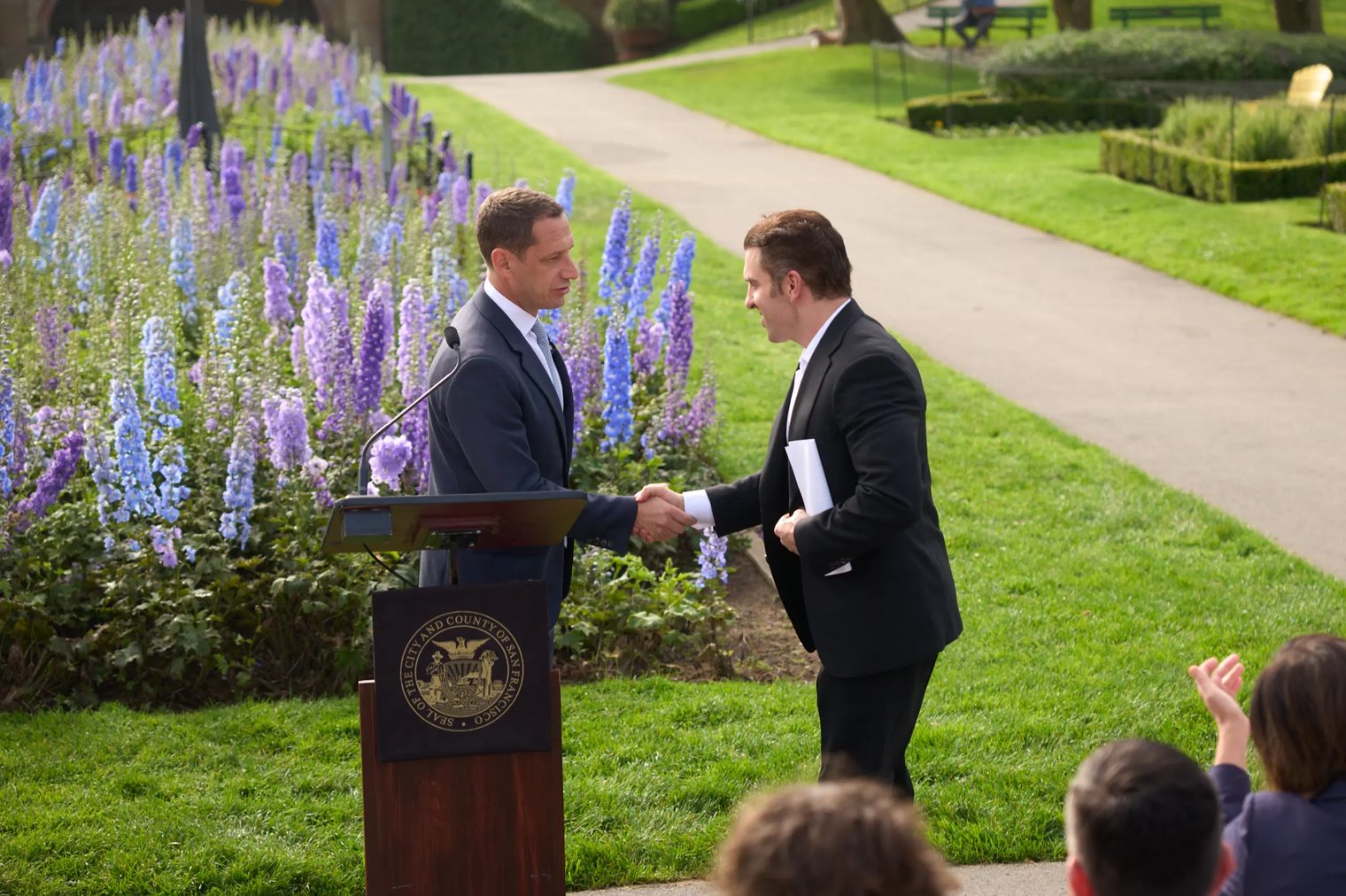
On November 20 the Mayor scrapped the Golden Gate Park parking plan he proposed and the Board of Supervisors approved. The new plan makes it harder for families to visit the park and takes $168M from Parks & Recreation programs.
The best spots go to free-riders looking for the best deal.
More than half the weekday parking beside the museums, the prime parking, is taken by cars that sit eight hours or more. Those are not families visiting the park. They are free-riders using it as the cheapest all-day lot in the neighborhood.
A free-rider car is counted as eight space-hours, the length of the survey day. The discount is the Original Lurie Plan's east-side price for 9 to 5 ($28 weekdays, $32 weekends) less the New Lurie Plan's ($6 Monday to Saturday, nothing on Sunday), times the number of all-day cars, for 250 weekdays and 52 of each weekend day. It uses the survey's 1,370 free spaces in the east half of the park and its east-half all-day shares (21% on weekdays, 20% on Saturdays, 10% on Sundays), which are lower than the shares beside the museums shown above. It assumes every free rider stays under the New Lurie Plan.
All-day shares: Rec and Park, "2019 Golden Gate Park Parking Survey," Table 6. The survey identifies these cars by how long and where they park, not by asking the drivers.
City funds are subsidizing the best parking deal in the center of our city.
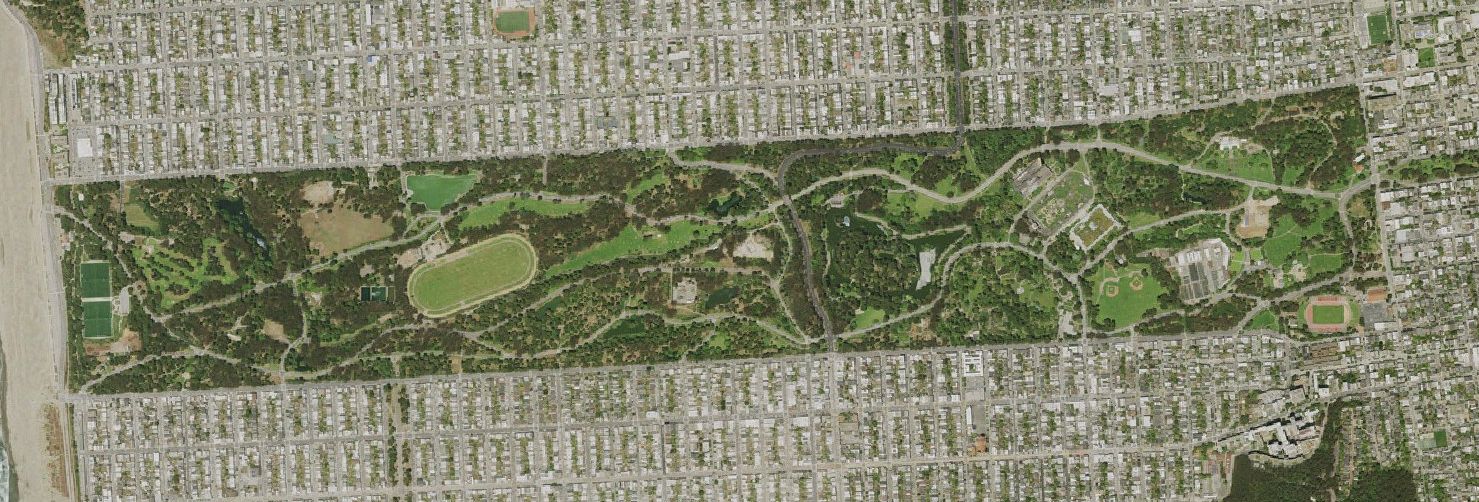
Swipe the map sideways to see what the garages charge.
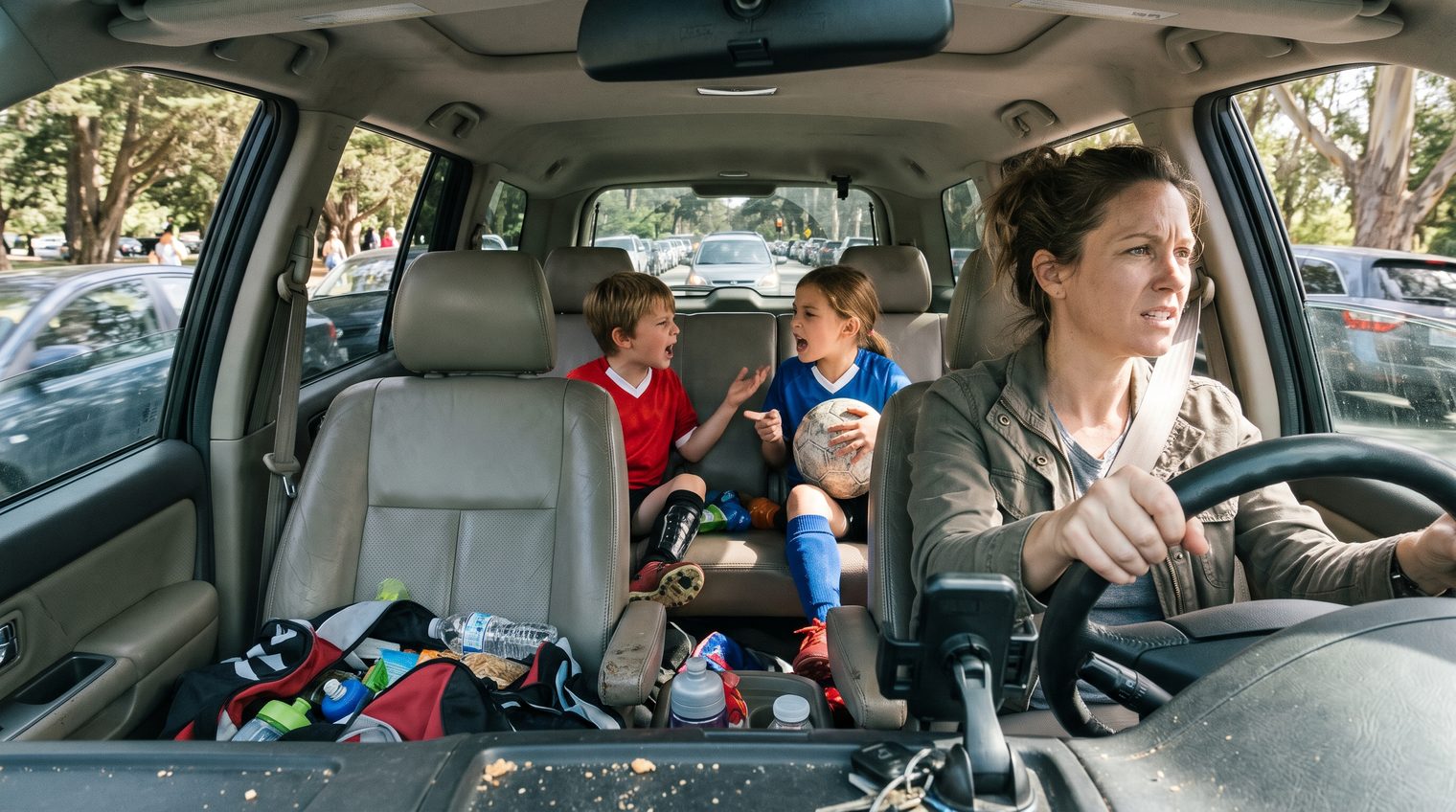
If you have tried to drive your kids to Golden Gate Park on a weekend, you know. The city’s own 2019 survey found the park’s free spaces 96% full on Sunday afternoons.
The original plan would have opened spaces up. The new plan keeps them full. By our estimate, a parent arriving on a weekend afternoon is more than 10 times as likely to find no space near the playground.

This estimates how hard it is for a parent arriving at 1 p.m. on a weekend to find a space near the playground under each plan. It starts from the city's 2019 count, which found 96% of the free spaces already full at that hour, the condition the New Lurie Plan keeps.
How it works: the model counts 30 spaces within a short walk of the playground. If a share of spaces is full, the chance that every one of those 30 is taken is that share multiplied by itself 30 times. Open spaces are treated as evenly spread. In the survey they were bunched far from the museums and playgrounds, so this understates how far she has to go.
The New Lurie Plan leaves weekend parking as it is today. The comparison is with the Original Lurie Plan (July 2025), ratified by Board of Supervisors. That plan's figure of 88.5% is the 96% found in 2019 less three quarters of the 10% of Sunday space-hours taken by cars parked eight hours or more.
Free parking doesn’t make the park more accessible. It uses public money to subsidize congestion.
Rec & Park was counting on paid parking. The Mayor’s own budget assumes $13.7 million a year from it. The new plan raises a small fraction of that. Against the plan the Mayor proposed and the Board approved, Rec & Park gives up about $168 million over 20 years.
Twenty-year figures are the yearly ones times twenty, with no growth. Sources: Rec and Park's $10M-a-year estimate, SF Standard; the $8.4M-a-year loss, SF Chronicle.
Rec and Park expected the Original Lurie Plan to raise about $10 million a year (SF Standard, Nov 12). The San Francisco Chronicle reported that the New Lurie Plan costs $8.4 million of that, leaving $1.6 million a year. Twenty years of each, with no growth: $200 million against $32 million.
The Mayor's own budget counts on more: $13.7 million a year from park parking (Controller's Revenue Letter, June 9). Measured against that, the hole is $243 million.
The gap does not close with more drivers. If every paid hour in every one of the park's 3,100 spaces were paid for, the New Lurie Plan would still raise only $5.8 million a year.
San Francisco is fortunate to have residents like Brian Chesky, who on November 9 gave the city’s parks a historic $100 million. Donors like him need to trust the city to be a good steward of their money.
"San Francisco's parks are unrivaled, and we are making them welcoming and accessible to everyone."
"I've always believed in the power of bringing people together, and parks are where a city meets."
Eleven days later, the Mayor reversed a plan he proposed and the Board of Supervisors ratified in July 2025, and gave away more parks revenue than the gift is worth.
Nobody has said where that money will come from. Brian Chesky’s gift likely cannot be used to fill it. That leaves the things the department pays for every day:
Asked about the hole, the Mayor’s office had this to say about its own parks department:
“They’re gonna have to work through it.”
This is the Mayor’s decision. Mayor Lurie must work it out.
Mayor Lurie caved to free-riders at the expense of parents trying to take their kids to the park, and defunded our parks programs in the process. It is a bad business decision, and it can be reversed. Bring back the July 2025 plan: open spaces for families, and money for the parks.
| Original Lurie Plan (July 2025), ratified by Board of Supervisors | New Lurie Plan (Nov 20, 2026) | |
|---|---|---|
| Rate | $1.25 to $4.00 an hour, higher east of Crossover Drive and on weekends | $1.00 an hour everywhere |
| Paid hours | 9 a.m. to 10 p.m., seven days | 9 a.m. to 3 p.m., Monday to Saturday |
| Sundays | Paid, $4.00 in the east | Free all day |
| Paid space-hours a week | 282,100 | 111,600 |
| Cost to park 9 to 5 on a weekday, east side | $28.00 | $6.00 |
| Who signed off | Rec and Park Commission (Feb 2025), Board of Supervisors Resolution 327-25 (Jul 2025), Mayor's proposed budget (Jun 2026) | Mayor's direction to the department |
"I directed the Recreation and Park Department to keep Sunday parking free in Golden Gate Park and limit the cost the rest of the week." Mayor Lurie, November 20.
Rates and hours: Rec and Park "Parking in Golden Gate Park" page, updated Nov 17, 2026. Space-hours use the 3,100 spaces the department reports. Quote: San Francisco Chronicle, Nov 20, 2026.
| Share of spaces occupied, 1 to 3 p.m. | Weekdays | Saturdays | Sundays |
|---|---|---|---|
| Free street and lot spaces, east half | 89% | 131% | 96% |
| Music Concourse Garage ($5.25 to $6.25 an hour) | 49% | 92% | 91% |
| Space-hours taken by cars parked 8 hours or more, east half | 21% | 20% | 10% |
| The same, on streets beside the museums | 57% | 45% | 40% |
Rec and Park, "2019 Golden Gate Park Parking Survey," Sept 24, 2019, Tables 5 and 6, eastern half of the park.